

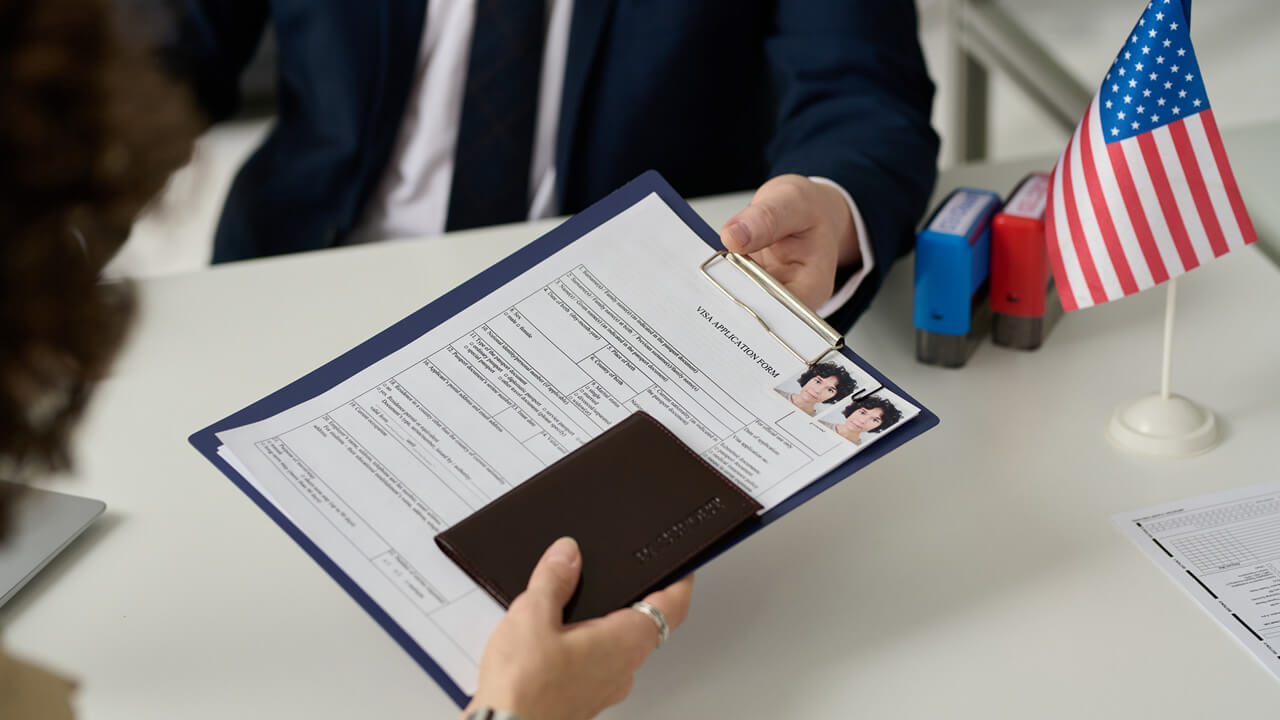
In these times of political uncertainty, many migrants are asking: can I arrange papers if I have a voluntary departure?
Voluntary departure may be a solution in some cases, but it is not a direct route to arranging paperwork and returning legally to the United States.
Sometimes there can be misleading or false information about voluntary departure from the country for undocumented migrants; in this article you will find a clear, legal and realistic explanation of what voluntary departure means, when it is used and what options exist afterwards.
What is voluntary deportation?
Voluntary departure, also known as voluntary removal, is a legal option that allows a person to leave the United States on their own and within a set time frame, without receiving a formal deportation order.
This is important because a deportation order leaves serious consequences on the immigration history.
On the other hand, with voluntary departure, there is no removal order, which can open up future options if you meet the conditions imposed; although it does not mean that the case is “clean” or that it can be easily returned.
Voluntary departure is regulated by federal immigration law and is usually granted officially by an immigration judge or by the government. It is not an informal arrangement or a decision that the person makes on their own.
This option is provided for in the Immigration and Nationality Act (INA) § 240B and regulated by 8 CFR § 1240.26. As already mentioned, the authority to grant it is an immigration judge or, in certain cases, the Department of Homeland Security (DHS).
Voluntary departure is a controlled way to leave the country, but it is not a waiver or an automatic solution to fix paperwork.
Another advantage of voluntary departure is that it allows some time in freedom for the migrant to leave his or her personal and financial affairs in order.
For example, a person who accepts voluntary departure at the end of their process usually receives up to 60 days to leave the country. If the release is granted before the case is over, the deadline can go up to 120 days, according to 8 CFR § 1240.26.
When is voluntary departure a good option?
Voluntary departure is neither good nor bad on its own. It all depends on the immigration status of each person.
In some cases, it may be a reasonable option when:
- There are no strong legal defenses to staying in the United States.
- The deportation process is already advanced.
- The person wants to avoid a formal deportation order.
- There is the possibility of starting a legal procedure from abroad in the future.
- The immigration judge offers it as an alternative to closing the case.
- Deportation is imminent and a period of time is sought to get your affairs in order.
For many migrants, accepting voluntary departure is a difficult but strategic decision. It allows you to close a process without formal deportation and keep some legal doors open, even if those doors are not always easy to cross. However, the fact that there is a possibility does not mean that it is a direct or easy way.
It is important to understand that voluntary departure does not erase unlawful presence, nor does it automatically eliminate immigration punishments. Therefore, before accepting it, it is advisable to analyze the consequences well and talk to a trusted immigration lawyer.
Voluntary departure is not the best option for everyone, but it can be convenient in certain scenarios common among the Latino community.
Can I arrange papers after a voluntary departure?
People who voluntarily leave the country without a deportation order have a better chance of returning legally than those who are deported. However, it is not easy to return to the United States legally.
It depends on your immigration history and the legal basis you have, but there may be ways to legally return to the country. If you intend to return, talk to Hispanic attorneys who protect Hispanics to learn about your options.
Option 1: Adjustment of Status from Within the United States
In some cases, it is possible to regulate immigration status without applying voluntary departure or facing deportation, but this is usually possible when the person legally qualifies to adjust status from within the country.
These situations are not the majority, but they exist.
For example, some people may adjust their status because they entered the United States legally, have a valid family petition, or are protected by a specific provision of immigration law. In these cases, leaving the country could even complicate or close an option that was already available.
Another reason a person may adjust their status without opting out is when they have an active legal defense in court, such as certain asylum cases, cancellation of removal, or other forms of immigration relief.
While the case is still open, the person is not obliged to leave the country and may have the opportunity to regularize their situation if they meet the requirements.
There are also scenarios in which voluntary departure is not appropriate, especially when the person has accumulated unlawful presence. When leaving the United States, that presence can trigger immigration punishments that prevent the return for several years.
Therefore, before accepting a voluntary departure, it is important to analyze whether there is a legal way to adjust status without leaving. Each case is different; therefore, before opting for voluntary departure, it is essential to explore all immigration options with your trusted migration lawyer.
Option 2: Apply for a visa from abroad
For many people, applying for a visa from abroad is the most realistic route.
After you comply with voluntary departure from the United States, you can apply for a visa from your home country if you have a valid basis, such as a citizen or resident relative, or an offer of employment.
This is where inadmissibility for unlawful presence, regulated by INA § 212(a)(9)(B), comes into play.
This law establishes:
- Inadmissibility for 3 years if you accrued more than 180 days of unlawful presence.
- Inadmissibility for 10 years if you accrued one year or more.
The good news is that leaving voluntarily avoids a deportation order, which makes it easier to analyze a consular case compared to a formal removal.
Option 3: Request a waiver
In certain cases, it is possible to apply for a provisional unlawful presence waiver or waiver. This waiver allows some people to apply for the waiver before leaving the country for their consular interview.
The U.S. Citizenship and Immigration Services (USCIS) explains that this waiver is available to those who can demonstrate extreme hardshipto a qualifying relative who is a citizen or permanent resident.
This option does not apply to everyone, but there are people who could apply and who do not know it. For this reason, it is essential to consult with a team of Hispanic attorneys who protect Hispanics.
Can I fix my paperwork through my job?
Yes, it is generally possible to arrange the papers through a job offer, but in many cases the process is carried out from abroad after complying with the voluntary departure.
Employment-based visas depend on several factors:
- Type of work.
- Employer sponsorship.
- Visa category.
- Previous immigration history.
Voluntary departure does not automatically remove the punishments for unlawful presence, so the process usually goes through a U.S. consulate and may require a waiver.
Work visas for people with prolonged undocumented presence can be difficult to obtain, but not impossible. That is why it is key to analyze the case before starting any procedure.
What happens if I was given voluntary departure and I did not leave?
This is a delicate situation. If you were given voluntary departure and did not leave, the law generally states that the voluntary departure is void and an automatic deportation order is issued.
In addition, 8 CFR § 1240.26 provides for additional penalties, such as:
- Civil fines.
- Loss of eligibility for certain immigration benefits for several years.
In these cases, it is essential to seek legal advice as soon as possible.
Where to apply for voluntary departure from the USA?
Voluntary departure from the United States must be documented and officially authorized. It should not be assumed as an informal agreement.
Voluntary departure can be processed:
- Before an immigration judge during the process.
- In some cases, it may be granted by DHS before it goes to court.
- The process can be started at any time using a DHS application.
I want to fix my papers: Is voluntary departure for me?
If you want to fix your papers, voluntary departure is not always the most convenient or the only option. For some people it may be a strategic decision; For others, it can close important doors if taken without knowing all the legal consequences and other options available.
Voluntary departure does not erase unlawful presence, does not imply a rapid return to the United States, and does not ensure that a future proceeding will be approved. In many cases, agreeing to leave the country without first analyzing the immigration history can trigger punishments that complicate or delay any attempt to fix papers.
Therefore, before making a decision that may affect your future and that of your family, speaking with an immigration attorney is essential. An attorney can review your entry into the country, how long you have been in the United States, your possible legal defenses, and the real options that exist, either inside or outside the country.
At Lorenzo Law Group/Immigration Lawyers we are a team of Hispanics who protect Hispanics. We explore all the possibilities that may apply in your case, help you understand your situation and its implications and present you with real options, without making false promises.
If you’re still wondering: CanI fix paperwork if I have a voluntary departure or is there a better option for me? It’s time to call us; at Lorenzo Law Group/Immigration Lawyers we will help you explore all the possibilities. Get informed and seek the legal support you need.
If you were interested in this article, we also recommend: