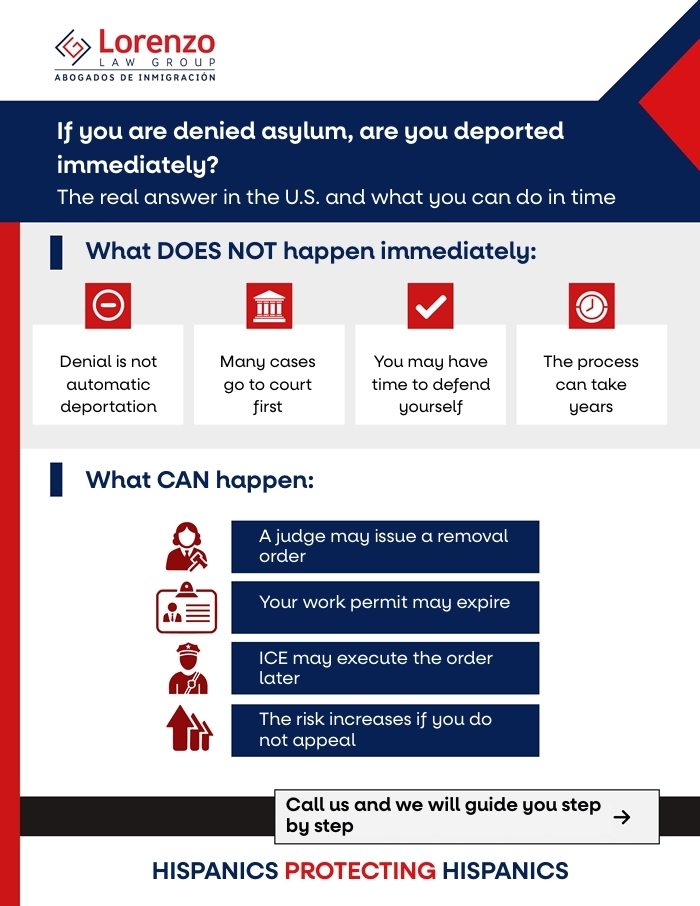


Many migrants live with the constant thought: “If I’m denied asylum, I’ll be deported immediately.”
But reality can surprise you: a denial doesn’t always end in deportation the next day.
So… what happens when I’m denied asylum? There are legal steps, appeals, and alternatives that can give you time, and even a new opportunity, to stay in the United States.
The data supports this idea. In fiscal year 2024, immigration courts denied 38,509 cases and approved 32,369.
Even with this situation, thousands of people obtain protection or keep their cases active through appeals and other legal avenues, demonstrating that an initial “no” is not the end of the road.
When an officer does not grant affirmative asylum, the case goes to court for further review, not to automatic deportation.
Added to this is the system’s overload: in certain cases, the median wait exceeds 1,900 days, approximately 5.2 years, which opens up real opportunities to prepare your defense. If you find yourself in this situation, stay calm and act strategically.
In this article from Lorenzo Law Group/Immigration Attorneys, we explain what happens if you are denied asylum in the United States, what options you can activate immediately, and how to prevent an adverse decision from becoming deportation. We will dispel myths and show you the legal path to protect yourself.
What happens if you are denied asylum?
Before we delve into the details, let’s clarify how asylum decisions work and why a denial doesn’t always mean immediate deportation. This guide summarizes the most common scenarios and what can happen in each.
When you file an asylum claim, whether affirmatively with USCIS or as a defense before an immigration judge, it’s possible that the officer or judge may determine that you don’t meet the legal requirements.
This negative decision is known as a denied asylum claim.
- In the affirmative process, an asylum officer may issue a final denial decision or a Notice of Intent to Deny before that decision.
- In the defensive process, the judge may reject your asylum case as part of the court’s decision.
Receiving a denial can be a difficult moment, but it doesn’t mean all is lost. So don’t despair, even though it’s normal to wonder, “What if I lose my asylum case?” You’re not alone.
There are still legal options available, such as appealing the decision, requesting a review, or exploring other forms of immigration relief that could allow you to remain legally in the country.
Recent statistics on asylum denials
To understand the true state of asylum in the U.S., it’s helpful to look at the numbers.
These recent figures help to put the burden on the system and the likelihood of success into perspective in different scenarios.
Here are some current data to give you an idea of the scale and difficulty of the process:
- In October 2024, the asylum approval rate was 35.8%, a significant drop compared to previous years.
- In fiscal year 2023, the U.S. granted asylum to approximately 54,350 people: 22,300 through affirmative processes with USCIS and 32,050 through defensive processes.
- A USCIS report indicates that in fiscal year 2024, the asylum denial rate reached 4,586 in some types of cases.
Taken together, these data indicate that many applications are rejected, so preparing the file well, appealing on time and having representation can make all the difference.
Does the denial of asylum automatically lead to deportation?
Not necessarily. Being denied asylum doesn’t mean you’ll be deported immediately.
What usually happens is that a removal order will be issued, especially in defensive cases.
However, immigration authorities must carry out that order if they decide to enforce it. But until that happens, you have rights, deadlines, and legal recourse.
When could that temporary “protection” be removed and the deportation made effective?
When an asylum case is denied, many people still retain a form of “temporary protection” while their legal status remains open.
However, this protection is not permanent. In certain scenarios, it can be lifted or expire, allowing immigration authorities to execute a deportation order.
These are some of the factors that can expedite this process:
- If you do not file appeals or legal remedies within the corresponding deadlines, a ruling that is not appealed becomes “final” and can be enforced.
- If the negative decision comes from an immigration judge and has already been reviewed by the Board of Immigration Appeals (BIA) or federal court, and those rejections have also been upheld, then the deportation order is final.
- Whether immigration authorities decide to enforce the removal order from your country of origin or a safe country depends on international agreements or immigration laws.
Therefore, an asylum denial is a dangerous step, but it doesn’t automatically lead to immediate deportation.
In short, an asylum denial does not equate to immediate deportation. The key is to act promptly, explore appeals and alternatives, and follow the appropriate legal guidelines to protect your right to remain in the country while your case is being resolved.
What are the consequences of a denied asylum request?
Before making any decisions, it’s important to understand the practical effects of a denial. Below, you’ll find the most common consequences of a denied asylum application and how each can affect your status, employment, and next legal steps.
Here are the most relevant consequences when an asylum application is denied:
- Removal or Deportation Order
Once your case is rejected, the judge may issue a removal order, making you subject to active deportation. - Loss of Work Authorization
If you had an EAD (Employment Authorization Document) linked to asylum, that authorization will end when the EAD expires or after a certain period following the negative decision, unless you file a valid appeal. - Inability to Easily Reapply for Asylum
If your case was denied by a judge or the BIA, filing a new asylum application is more difficult: you will have to demonstrate that there are significant changes in your country that affect your eligibility. - Possible Alternative Protections
Even if you are denied asylum, you may qualify for more limited forms of protection, such as withholding of removal or deferral of removal, under the Convention against Torture.
These protections do not allow you to bring your family members to your country or obtain permanent residency immediately, but they prevent you from being returned to a country where you would face severe harm. - Risk of Deportation if the Removal Order is Executed
If ICE (Immigration and Customs Enforcement) decides to enforce the order, you could be detained and deported. Execution can occur at any time after the order becomes final. - Psychological and Social Impact
Refusal can generate stress, anxiety, and constant fear that you could be deported at any moment, affecting your daily life, work, family, and mental health.
These consequences do not apply equally in all cases and can be mitigated through appeals, motions, and alternative protections.
If you received a denial, act quickly and seek professional advice to develop a strategy.
At Lorenzo Law Group/Immigration Attorneys, we can guide you toward the best legal path for your situation.
Advice if you are denied asylum and how an immigration lawyer can help you
If you received a denial, timing and strategy make all the difference. These practical tips help you organize your next steps and explain how an immigration attorney can protect your rights at every stage.
- File your appeals and motions within the deadlines.
Not missing deadlines is key. If you don’t appeal in time, your decision will be final. - Gather additional solid evidence
Testimonials, medical certificates, NGO reports, recordings, photographs, sworn statements: everything helps to strengthen your case. - Explore alternative protections
CAT (Convention Against Torture) or withholding of removal may be options if you cannot obtain asylum at that time. - Stay present in the process
Do not abandon hearings or legal correspondence, as this may be interpreted as abandoning the case. - Prepare for litigation
If your case goes to the BIA or federal court, you will need well-founded arguments. - Find out about agreements with third countries or specific state regulations
In certain cases there are provisions that allow deportations to safe countries or bilateral agreements that affect your case.
A denial is not the end of the road. With timely guidance from immigration attorneys, well-prepared evidence, and timely appeals, it is possible to protect your status while your case is being resolved and keep alive the possibility of a new opportunity in the United States.
Your future still has options: act before it’s too late
The important thing is not to give up or remain paralyzed by the thought, “If they deny me asylum, I’ll be deported.” With proper guidance and solid evidence, you can still protect your status and keep alive the possibility of remaining in the United States.
In most cases, a denial does not imply automatic deportation, but it does mark a critical point that requires swift action, legal strategy, and professional advice.
Every case is different: some can appeal, others can request additional protections, or explore new avenues for remaining in the country.
With the support of Lorenzo Law Group – Immigration Attorneys, you will have a team that understands your situation, is an expert in immigration law, and will guide you step by step to avoid mistakes that could cost you your stay.
Contact us for a free consultation and discover your options to feel more at ease regarding the constant thought, “If they deny me asylum, I’ll be deported immediately.” With the right guidance, your peace of mind and that of your family will return.