


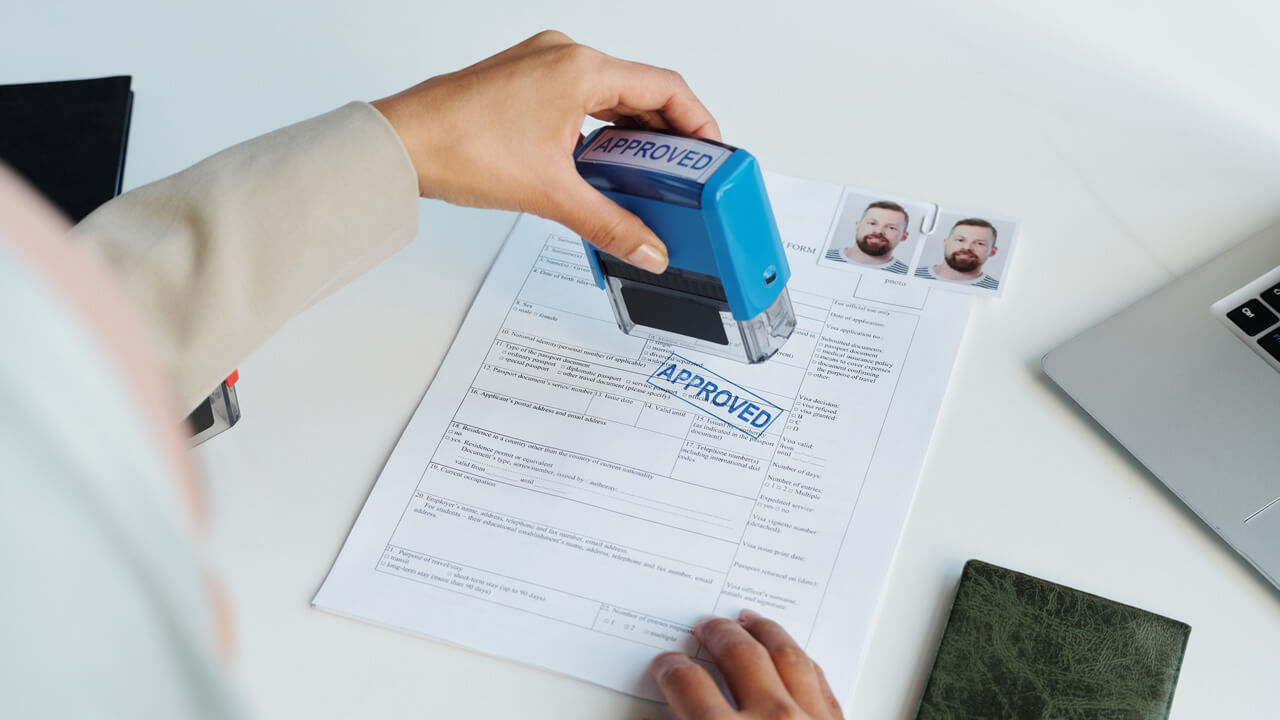
The marriage green card is one of the safest and most direct ways to obtain residency in the United States.
This type of procedure not only offers migratory stability, but also provides the opportunity to build a life as a couple with full legality and rights.
According to the Migration Policy Institute , as of Nov. 1, 2023, more than 4 million applicants—including spouses and children—were on the waiting list for family-based immigrant visas.
These figures reflect the enormous demand and importance of migration processes based on family ties.
In 2025, the marriage green card is still the most used path by thousands of Latino migrants seeking to establish themselves legally and permanently with their partner in the U.S.
However, the process requires meeting specific requirements, preparing accurate documentation, and staying abreast of recent changes in USCIS (U.S. Citizenship and Immigration Services.
In this guide, the team at Lorenzo Law Group/Immigration Lawyers, we explain step by step the updated requirements, waiting times, and the most recent modifications that you should know before starting your application for permanent residence.
What is the marriage green card and why is it important?
A marriage green card (permanent resident card) is issued to foreign nationals married to U.S. citizens or permanent residents.
This status allows you to live, work, and travel legally in the country, as well as open the door to citizenship in the future.
For many Latino migrants, this pathway represents an opportunity to stabilize their lives and immigration status. However, the process requires patience, accurate documentation, and up-to-date knowledge of legal changes.
What are the requirements for a marriage green card?
According to USCIS, you must meet the following basic requirements:
- Be legally married to a U.S. citizen or permanent resident.
- That the marriage is genuine and not for the sole purpose of obtaining residency.
- File Form I-130 to start the petition.
- If you are inside the U.S., you can also file the I-485 (adjustment of status). If you are abroad, you must do it through consular channels.
- Submit documents that prove the relationship: marriage certificate, photos, joint accounts, leases, etc.
- Not have a serious record or causes of immigration inadmissibility.
Let’s look at a practical example:
Mariela, from Mexico, married Juan, who is a U.S. citizen. John files the I-130 and includes evidence of their relationship. Maria gets a two-year conditional residency because the marriage was less than two years old when it was approved.
What laws and sources regulate the process?
The process is governed by the Immigration and Nationality Act (INA) and USCIS regulations.
According to the Pew Research Center, in 2023, approximately 1.2 million legal immigrants received a green card in the U.S., with a significant proportion obtained through family ties.
In addition, the Bureau of Labor Statistics reports that in 2024, immigrants accounted for 19.2% of the U.S. civilian workforce, up from 18.6% in 2023.
The USCIS itself highlights that genuine marriage to a citizen or permanent resident is one of the main legal pathways to permanent residency.
How long does a marriage green card take in 2025?
Wait times depend on several factors: whether the sponsor is a citizen or resident, whether you are applying from inside or outside the country, and the workload of the USCIS.
According to 2025 data:
- If the spouse is a U.S. citizen, the process takes between 9 and 14 months.
- If the spouse is a permanent resident, it can be extended up to 35 months.
- The average time for Form I-130 is around 35 months at some centers, according to Boundless Immigration.
- The USCIS portal confirms additional delays due to new verification procedures.
Practical example:
Carlos and Ana, a couple in California, file I-130 and I-485 together. If everything is complete, they receive a response in approximately 10 months. But if there are errors or a document is missing, the case can be delayed for more than a year.
Why does the process take so long?
Among the most common causes are:
- Incomplete Requests for Evidence (RFEs);
- form updates (new versions of I-485 and I-129F were available in 2025);
- increased USCIS monitoring for fraudulent marriages;
- Differences in workload between offices or consulates.
That’s why reviewing each document before sending it is essential to avoid delays.
What changes are there in 2025 for the marriage green card?
In 2025, the process to obtain a green card through marriage has undergone important updates that applicants should be aware of to avoid delays or rejections.
These changes seek to speed up the process and guarantee that only genuine couples have access to residency.
Key adjustments have been made this year:
- new mandatory editions of Forms I-485 and I-129F;
- greater emphasis on the authenticity of the marriage: the USCIS included specific warnings against fraudulent marriages;
- longer processes at some family service centers due to more rigorous document verification;
- clearer requests on whether the process will be internal (adjustment of status) or consular.
How do these changes affect you?
- If you submit old forms, you may be rejected.
- A marriage of less than two years gives you conditional residency, so you’ll need to file the I-751 before it expires.
- Lack of evidence or inconsistencies may lead to additional interviews.
Knowing these changes allows you to prepare your application correctly, avoid mistakes and increase the chances of obtaining permanent residence without setbacks.
How do you get the 2025 marriage green card?
Obtaining a green card through marriage requires following an orderly process and complying with the legal requirements established by the USCIS. Here’s a step-by-step explanation of how it works:
- Prepare documents: marriage certificate, ID, and proof of relationship.
- The sponsor (citizen or resident) files Form I-130 with USCIS.
- If you are in the U.S., you also file the I-485 for adjustment of status. If you are abroad, you follow the consular process.
- Wait for the approval of the I-130 and the interview (it can be face-to-face or virtual).
- Receive residency: If the marriage is less than two years old, it will be conditional for two years.
- Before those two years are up, file the I-751 to remove conditions and obtain 10-year permanent residency.
Carefully following these steps and having specialized legal advice increases your chances of obtaining a marriage green card quickly and safely, thus guaranteeing the stability of your legal status in the U.S.
Practical tips to avoid mistakes
Before submitting your application, it is essential to know the steps that help reduce risks and avoid delays in the marriage green card process.
- Use the updated version of the forms (always check in uscis.gov).
- Attach solid evidence of genuine marriage.
- Respond quickly to any USCIS notification.
- Consult with an attorney if you have irregular status before applying.
- Check the processing times with the official USCIS tool.
Following these recommendations will allow you to move forward with greater confidence and increase the chances of success in your residency process.
How to renew or remove conditions of residency by marriage?
If your residence is conditional, you must file Form I-751 within 90 days before expiration to convert it to a 10-year residence. Failure to do so may result in loss of status.
If you already have apermanent (10-year) green card and your physical card is about to expire, file Form I-90 to renew it. This procedure replaces the document, not the legal status.
Tip: Keep digital copies of your immigration documents and renew your address online if you move, so you don’t miss important notifications.
Your route to permanent residency
In 2025, the marriage green card is a solid pathway to regularize your status and live legally in the U.S., remember:
- meets USCIS requirements and retains genuine evidence of the link;
- Wait times vary between 9 and 35 months depending on the type of sponsor;
- always use updated forms and check the dates of editing;
- if your residency is conditional, file the I-751 within two years.
Preparation and proper advice are key. At Lorenzo Law Group/Immigration Lawyers we can review your documents, guide you on deadlines, and avoid mistakes that delay your case.
Ready to move forward? Request a free consultation today to receive personalized marriage green card guidance.