
VAWA Immigration Attorney
A VAWA immigration attorney helps abuse survivors self-petition for a green card without their abuser’s knowledge. Lorenzo Law Group provides confidential, compassionate legal support.
If you’re suffering abuse at the hands of a U.S. citizen or permanent resident family member, you may have options to protect yourself and your future. We understand that abusive family members may use immigration status as a way to control their victims, which is why the Violence Against Women Act (VAWA) lets qualifying individuals apply for immigration relief without relying on their abusive family member. A VAWA immigration attorney can help you understand your rights, file a VAWA petition, and protect your privacy throughout the process.
Call Lorenzo Law Group at 888-212-2207 to schedule a consultation with a VAWA lawyer now.
Table of Contents
Talk To An Immigration Attorney Who Understands Your Story.
What is VAWA Immigration?
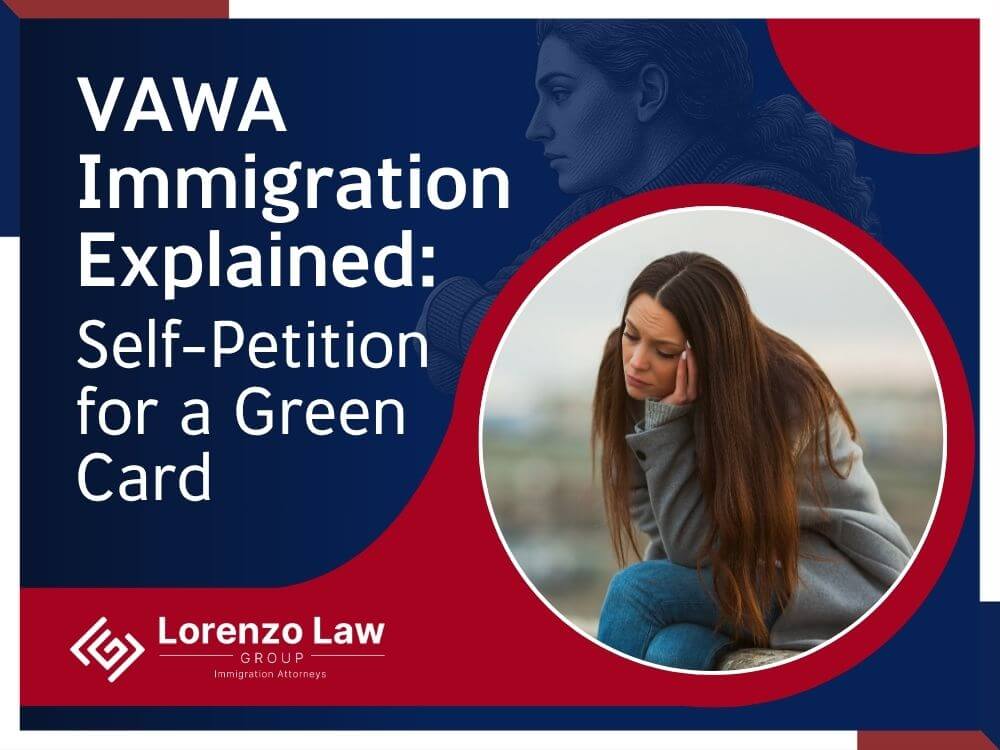
VAWA immigration is a legal pathway that allows abuse survivors to self-petition for lawful status. If you qualify, you can apply for a green card on your own instead of relying on the person who harmed you. You can apply without their knowledge, consent, or involvement.
While the name may imply otherwise, VAWA protections apply to people of all genders and ages. Qualifying individuals may include spouses of U.S. citizens or green card holders, children of abusive parents who are citizens or permanent residents, or parents being abused by U.S. citizen children.
VAWA Requirements and Who Qualifies
To qualify for VAWA, you must meet several legal requirements. They include:
- A qualifying relationship: You must be the spouse, child, or parent of a U.S. citizen or lawful permanent resident.
- Abuse or extreme cruelty: This may come in the form of physical violence, emotional abuse, psychological harm, threats, or financial control.
- Good moral character: You should be able to demonstrate that you have generally followed the law and shown good moral character.
- Shared residence: You may also have to show that you live or lived with the abuser.
Evidence is a key part of your VAWA petition, and it does not need to be limited to a police report.
Even if you don’t have a police report, you may be able to qualify via personal statements, medical or counseling records, messages and photos, and statements from those who are close to you.
Many victims do not report abuse, so immigration law is flexible in how victims can prove their case.
VAWA Petition Process Explained
The VAWA petition process begins when you file Form I-360, Petition for Amerasian, Widow(er), or Special Immigrant. This form requires you to explain your relationship, meet VAWA requirements, and describe the abuse you have experienced. You must also submit documentation proving your abuse and eligibility.
If your VAWA petition is approved, you may be able to take the next step toward lawful permanent residency through adjustment of status.
Confidentiality is a critical part of VAWA immigration. USCIS is prohibited from contacting your abuser or sharing any information about your immigration case. Victims are often most vulnerable when they are trying to leave, and confidentially requirements strive to keep victims safe.
VAWA Processing Time
VAWA cases take time, and your processing time may depend on numerous factors, including:
- Complexity of your case
- Type and amount of evidence submitted
- Current USCIS workload
In general, the VAWA processing time may take several months or longer depending on your case and USCIS backlogs.
What’s the Difference Between a VAWA Case and a U-1 Visa?
Victims of abuse may learn about both VAWA and a U-1 visa. However, there are several key differences.
One key point when asking what’s the difference between a VAWA case and U-1 is that VAWA requires a qualifying family relationship, while a U visa does not.
U visas require certification from law enforcement, but VAWA does not require law enforcement cooperation.
While VAWA focuses on familial abuse, U visas apply to victims of a variety of qualifying crimes, one being domestic violence.
Finally, U visas have an annual cap, but VAWA petitions do not. This means that there is generally a substantial backlog for U-1 visas.
Speak With an Immigration Attorney Today
Common Challenges in VAWA Immigration Cases
VAWA cases can be sensitive and high-stakes. Common issues applicants may face include:
- Proving abuse without a police report
- Gathering evidence safely without putting themselves in harm’s way
- Delays or Requests for Evidence
- Fear of retaliation
- Uncertainty about immigration status
Many people who meet VAWA requirements never take the first step due to these challenges.
When you combine them with the emotional stress of abuse, taking that first step may seem impossible. Working with a VAWA immigration attorney can help you move forward with a clear plan while focusing on your safety.
How a VAWA Lawyer Can Help
These challenges can be overwhelming, which is why we’re committed to helping abuse victims seeking status via VAWA. A VAWA lawyer can guide you through your VAWA petition and help you understand each step.
Some of the assistance we provide includes:
- Evaluating whether you meet VAWA requirements
- Identifying strong and applicable evidence for your case
- Preparing a detailed, compelling personal statement
- Responding to RFEs or following up on delays
- Filing your VAWA petition
- Planning your next steps, including adjustment of status
You do not have to stay in a position where your immigration status is used against you to control you. VAWA immigration offers a path forward while protecting your privacy and safety.
If you believe you may qualify, our team is here to help. Call us at 888-212-2207 and talk to a VAWA immigration attorney today.

Schedule Your VAWA Immigration Case Evaluation
Schedule a formal case evaluation with a qualified VAWA immigration attorney at Lorenzo Law Group. We will assess your eligibility, explain Form I-360 requirements, and develop a confidential legal strategy. No police report required. Take controlled, informed steps toward lawful permanent residency.

1 Ring
Average time it takes us to answer your call.

3 Minutes
Approximate time needed to let you know if we can review your case.